
Story
Project Development
Map
Location filters
Loading world map…
Regions
Main story outline
World systems
Characters, Conversations & Quests
Starter characters
The web party contains ELMO (Human Warrior), ELMARA (Elf Warrior), and PALMANO (Elf Warrior). Their names, portraits, attributes and skills come from the bundled character saves.
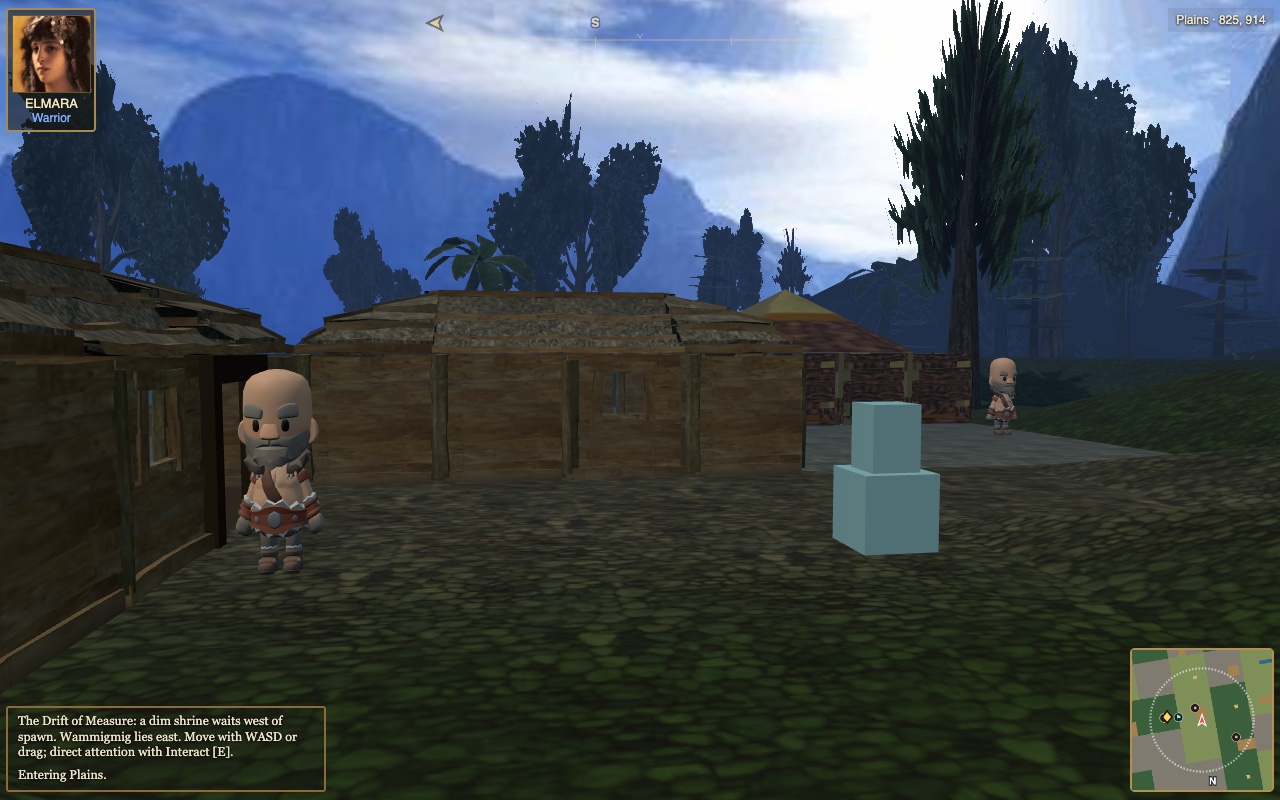
Port status: party data is loaded; ELMARA appears in the Play HUD. Individual party-member controls remain limited; world-character conversations are playable.
Listed in starter_party.json. See characters.json for races, professions and saved-character paths.
World inhabitants
The scenario defines humanoid populations and wildlife, including human commoners, yeti hunters, boarmen, kobolds and wolves. These are population/creature types, not a roster of authored quest-givers.
Port status: the frozen save contains ecology records, but roaming inhabitants and encounters are not rendered or simulated in Play yet.
Browse population and creature definitions
Defined in scenario ecology.xml; live instances are serialized in the frozen save’s ecology. Each entry below links to its Java implementation.
Conversations
No authored dialogue trees or branching NPC conversations were found in the bundled scenario or Java source. The original engine does have encounter greetings and social skills such as Chatter and Diplomacy.
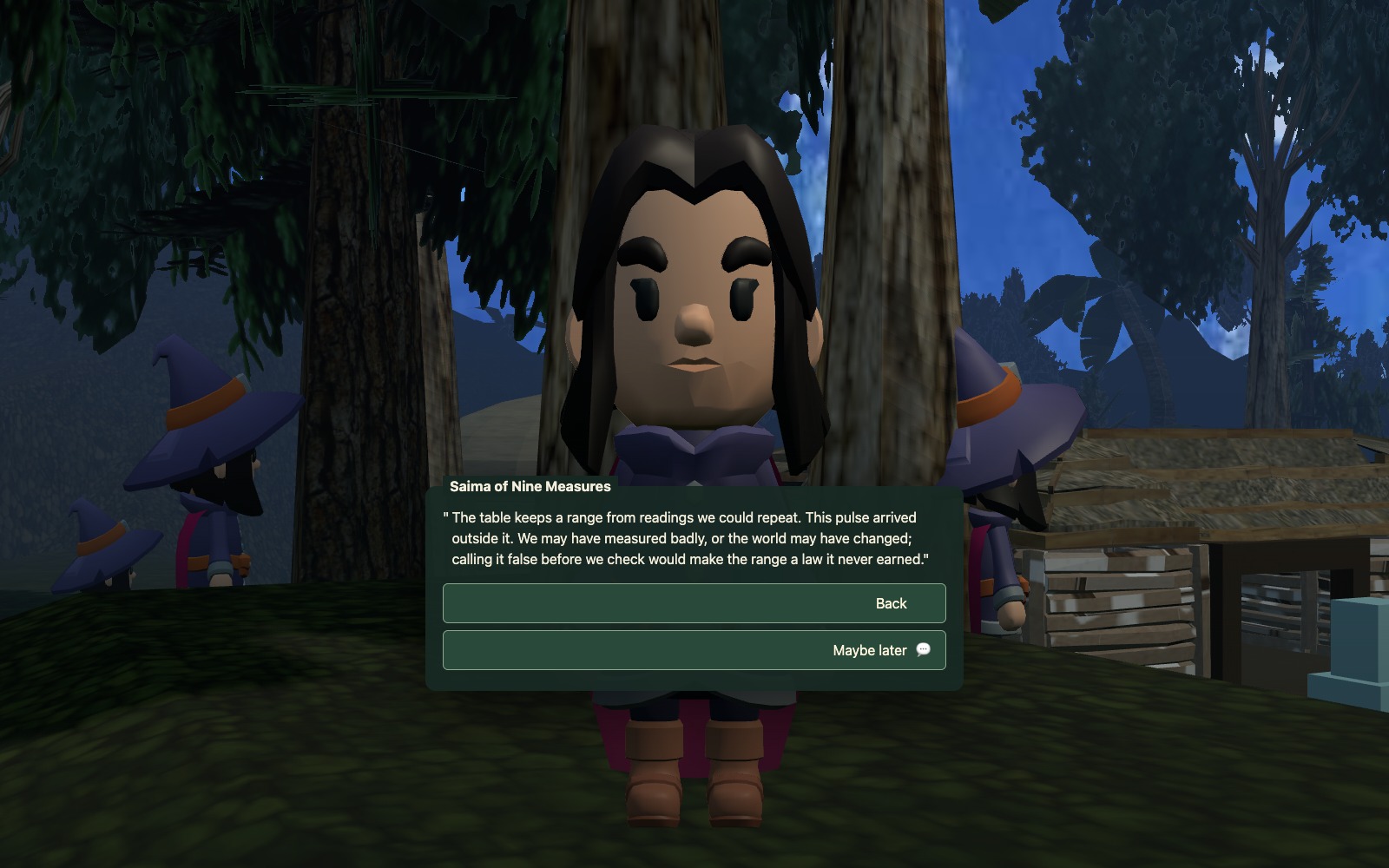
Port status: the web port has authored world-character conversations and quest choices; the original social-skill encounter system is not ported.
Sources: EncounterWindow.java, Chatter.java, Diplomacy.java.
Quests & story
No authored quest list, objectives or quest journal were found in the bundled scenario. Its event list contains one introduction with two story blocks: a welcome to open-ended exploration and a keyboard/mouse tutorial for the original Java game.
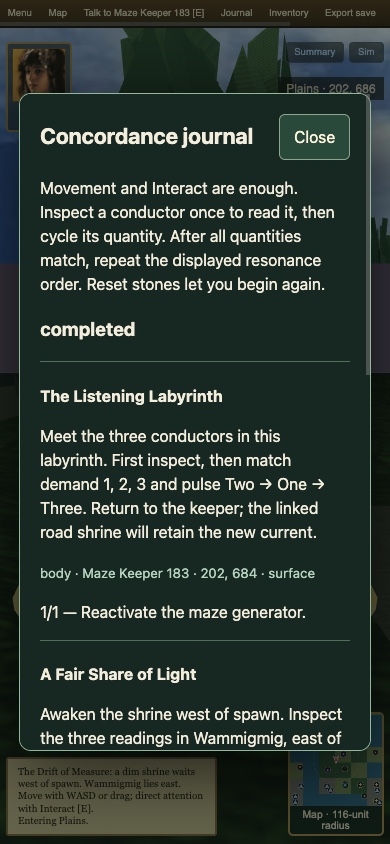
Port status: the original introduction can be read here. The web port has five playable main-story quests.
Listed in events.xml and story/intro.xml. Original playback: Events.java; scenario flags: ScenarioState.java.